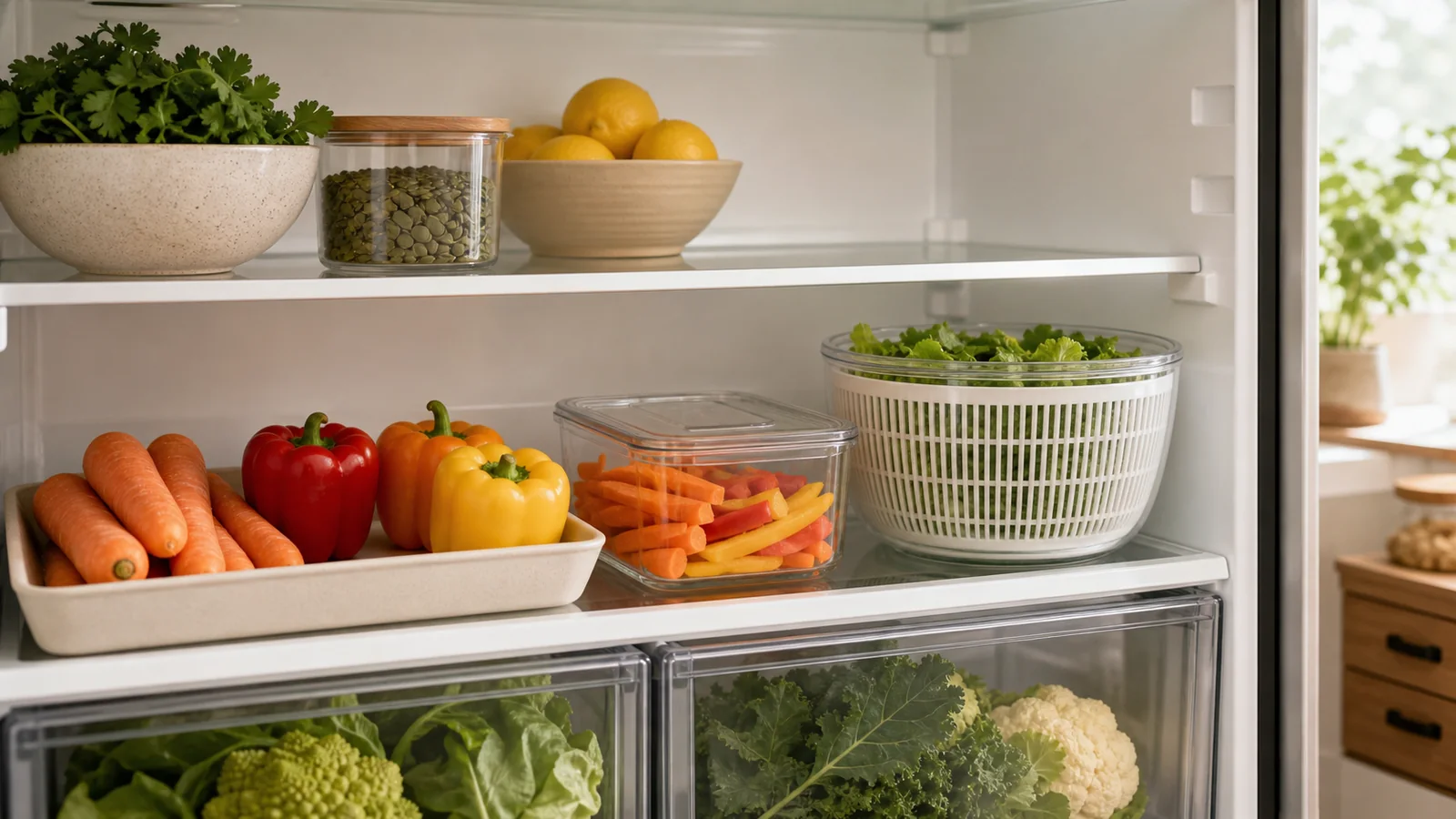
The safest simple rule is to wash vegetables under cool running water, dry them well, and refrigerate anything cut or perishable promptly. Do not seal wet vegetables in a container. Extra moisture speeds quality loss, while cut produce needs cold storage and protection from cross-contamination.
The right setup depends on what you have actually done to the vegetables. A whole washed pepper, a bowl of cut carrots, and a batch of cooked broccoli should not all be treated as the same thing.
Quick answer: sort by preparation state
Use three groups before you reach for a container:
- Whole and unwashed: Leave most produce unwashed until you are ready to prepare or eat it. The University of Minnesota Extension says waiting to wash helps preserve quality and shelf life.
- Whole and washed: Dry the surface completely. Refrigerate perishable vegetables, and choose storage that does not trap visible water around them.
- Cut, peeled, or cooked: Move these into clean, covered food-storage containers and refrigerate promptly. Keep them away from raw meat, poultry, seafood, and any utensils used for those foods.
This guide is about refrigerated vegetables prepared for near-term meals. It is not a canning, fermentation, freezing, or long-term preservation guide.
Start with the question most people skip
Do you need to wash the whole batch today?
If the answer is no, leave the unused portion unwashed. Minnesota Extension recommends washing produce when you are ready to prepare or eat it unless it is visibly dirty. That is a quality decision, not an excuse to skip washing before cutting, cooking, or eating.
If meal prep is the reason you are washing now, work in a clean area and finish the job. Washing a large batch only to put it away damp creates a new problem.
Packaged produce marked “pre-washed,” “washed,” “triple washed,” or “ready-to-eat” does not need another wash. The FDA says it can be used without further washing. If you decide to rewash it anyway, keep it away from dirty sinks, tools, and countertops.
Wash without adding soap or a produce wash
The FDA recommends plain running water. It does not recommend soap, detergent, or commercial produce wash because produce is porous and residues can be absorbed. Washing reduces bacteria on the surface, but it does not eliminate every hazard.
Use this sequence:
- Wash your hands with soap and warm water for at least 20 seconds.
- Clean the sink, faucet, counter, cutting board, knife, and colander or spinner.
- Rinse produce under cool running water before peeling or cutting it.
- Rub firm vegetables gently. Use a clean produce brush for sturdy skins such as cucumbers.
- Keep delicate produce in a colander and rinse gently. Do not leave it soaking.
- Dry it before storage.
Do not mix cleaning chemicals, and never use bleach or household detergent on food.
Drying is part of storage, not an optional extra
The FDA recommends drying washed produce with a clean cloth or paper towel. Minnesota Extension says to air-dry it or use a disposable towel to reduce the chance of recontamination.
For leafy greens, a clean salad spinner removes water from folds and stems more effectively than a quick shake. Spin, empty the collected water, and spin again if the leaves are still visibly wet. Clean and air-dry the spinner after use.
For firm vegetables, spread them in a single layer on a clean towel until the outside feels dry. Pay attention to stem hollows, cut ends, and tight creases where droplets collect.
Do not confuse a dry surface with a guarantee of long shelf life. Drying solves one storage problem. Temperature, freshness at purchase, bruising, variety, and the refrigerator itself still matter.
Choose storage by what you prepared
Whole washed vegetables
After the surface is dry, return perishable vegetables to a clean refrigerator. The FDA advises keeping perishable produce at 40°F or below and recommends using a refrigerator thermometer rather than trusting the control dial.
Avoid a container with visible water in the bottom or heavy condensation on the lid. If moisture keeps collecting, the vegetables probably went in damp, the container has too little airflow for that produce, or the refrigerator temperature is fluctuating.
A shallow tray can work as a short staging area for vegetables you plan to use soon, but it can also let produce dry out. For longer storage, follow the produce-specific guidance from your grocer, extension service, or package and use the crisper settings as the refrigerator maker directs.
Leafy greens and herbs
Dry leaves carefully before refrigeration. A clean spinner basket or produce container can keep leaves from sitting in pooled water, but the storage setup still needs to match the produce and container design.
Remove leaves that are already slimy or badly damaged instead of hiding them in the middle of the batch. Check the container the next day. If you see droplets collecting, dry the leaves and container again rather than adding more wet greens on top.
Cut or peeled vegetables
Cut surfaces need more protection than intact vegetables. Use a clean, covered food-storage container and refrigerate promptly. Label the container with the preparation date so it does not become an anonymous box at the back of the refrigerator.
Minnesota Extension advises keeping cut produce at 41°F or below and using cut or cooked produce within seven days for food safety and quality. Treat that as a maximum, not a freshness promise. Discard it sooner if it develops mold, slime, an off odor, or other clear spoilage.
Some vegetables are commonly stored in water for texture, but that is not a universal method. Unless a reliable produce-specific source supports it, do not assume soaking cut vegetables is better than keeping them clean, cold, covered, and dry.
Cooked vegetables
Cool and refrigerate cooked vegetables promptly in clean containers. Do not put a deep, steaming pot straight into a crowded refrigerator and expect the center to chill quickly. Divide a large batch into shallow containers so it can cool more evenly.
Cooked vegetables belong in the cooked-food part of your meal-prep system, not mixed back into a container that held raw, unwashed produce.
Build a five-minute refrigerator reset
A small reset keeps the system usable after the first day:
- Check the refrigerator thermometer. Aim for 40°F or below for perishable produce, following FDA guidance.
- Put cut and ready-to-eat vegetables above or well away from raw meat, poultry, and seafood so drips cannot reach them.
- Move the oldest prepared container to the front.
- Look for pooled water, lid condensation, slime, mold, or damaged pieces.
- Wipe a wet container dry and move sound vegetables into a clean one if needed.
- Keep a clear zone for this week’s prepared vegetables instead of scattering small boxes across several shelves.
If deep shelves are making food disappear, the retrieval zones in our guide to organizing deep pantry shelves also work as a planning idea for refrigerator bins: one job per zone, with the oldest items visible first.
A practical prep order that saves time
Storage works better when it is part of the prep routine rather than cleanup at the end.
- Clear and clean the work area.
- Set out a clean towel or spinner before washing anything.
- Wash only the amount you intend to prep.
- Dry whole vegetables before cutting.
- Use a clean cutting board and knife.
- Sort finished vegetables into whole washed, cut raw, and cooked groups.
- Cover, label, and refrigerate the cut and cooked groups promptly.
- Wash the spinner, colander, board, knife, and counter.
If chopping is the slow part, our vegetable prep tool guide compares a knife, manual chopper, mandoline, and food processor by batch size and cleanup. The storage steps in this article still apply regardless of the tool.
Stop and discard rather than trying to rescue it
Storage advice cannot reverse spoilage or contamination.
Discard produce that is rotten. Cut away bruised or damaged areas before preparation when the rest is sound, following FDA guidance, but do not trim visible mold from soft, wet, or heavily affected prepared vegetables and assume the rest is safe.
Also stop if:
- raw meat or seafood liquid has dripped onto ready-to-eat vegetables;
- the refrigerator has been above a safe temperature for an unknown period;
- a container has persistent slime, mold, or an off odor;
- you cannot tell how long cut vegetables have been stored;
- the produce was involved in a current recall.
When a recall is involved, follow the recall notice rather than washing the food and trying to keep it.
Common mistakes
Washing the entire grocery haul automatically
This feels efficient, but it can shorten quality for produce you will not use soon. Wash close to preparation unless a produce-specific method says otherwise.
Packing vegetables while they are still wet
A tight lid does not fix a wet batch. Dry the vegetables and the container first.
Using soap because water feels too simple
Plain running water is the FDA method. Soap and household detergents do not belong on produce.
Treating every vegetable as if it has the same storage life
Preparation state matters, and so does the vegetable. This guide deliberately avoids universal day-by-day freshness promises.
Trusting a date while ignoring the food
A label helps you know when the batch was prepared. It does not overrule mold, slime, bad odors, refrigerator failure, or cross-contamination.
Frequently asked questions
Should I wash vegetables before storing them?
Usually, wait until you are ready to prepare or eat them. If you wash ahead for meal prep, dry them thoroughly and refrigerate cut or perishable vegetables promptly.
Can I store washed vegetables in sealed containers?
Cut vegetables should be protected in clean, covered food-storage containers. Whole washed vegetables need to be dry first, and the best balance of cover and airflow varies by produce. Do not seal visible moisture inside.
Should I put a paper towel in the container?
A clean towel can absorb small amounts of surface moisture, but it is not a substitute for drying the produce. Replace it if it becomes wet or dirty. Do not use it to hide standing water at the bottom of the container.
How cold should the refrigerator be?
The FDA recommends 40°F or below for perishable produce. Check with a refrigerator thermometer.
How long can I keep cut vegetables?
Minnesota Extension gives seven days as a maximum for cut or cooked produce kept cold. That is not a promise that every vegetable will stay appealing for seven days. Use the preparation date, refrigerator temperature, produce-specific advice, and signs of spoilage together.
Is this a product-tested storage method?
No. This is a method-first guide based on FDA and university-extension food-safety guidance. We did not run a controlled shelf-life test or compare storage-container brands.
Sources
- FDA: Selecting and Serving Produce Safely
- FDA: 7 Tips for Cleaning Fruits, Vegetables
- University of Minnesota Extension: Washing Fresh Fruits and Vegetables Safely
- University of Maine Cooperative Extension: Best Ways to Wash Fruits and Vegetables
For more practical kitchen systems, browse Kitchen Time-Savers. If loose storage lids are crowding the same cabinet, use our measure-first food-container lid guide.